

Data Warehouse Essentials for Dashboard Reporting in PE-backed Companies
Despite significant investment in software and reporting tools, few companies have a sustainable, strategic approach to managing their data. The gap is almost never the data itself. It is the architecture underneath it. For a PE-backed company planning to drive growth through better insights, understanding that the quality of those insights depends on how well your data warehouse mirrors your business structure is the right place to start.
Data comes from countless systems: accounting, sales, operations, marketing, HR, and more. Even small companies can have ten or more data sources. Software systems designed to improve efficiency create information silos as a side effect, and when data is siloed, generating a cohesive view of performance becomes nearly impossible. For a company using data to drive its value creation plan, that fragmentation is a direct competitive disadvantage. The data warehouse is what closes it.
A data warehouse is the single, structured repository where all your data is organized so it can be put to good use. It is the sole source of truth for the company and the foundation for The Dashboard Effect, Blue Margin’s term for using data intelligence to automate a culture of growth, profitability, and accountability. Approaching a data warehouse from a purely technical perspective, rather than starting from the business strategy it needs to serve, is the most common reason data warehouse projects stall.
The Problem with Excel-Based Data Management
Excel is not the most strategic data management tool. It is simply the most common one. While virtually indispensable for individual analysis, Excel files are rarely governed and tend to proliferate, making a company’s data problem worse rather than better over time. High-cost resources spend significant hours assembling and manipulating reports instead of doing higher-value work. Outdated versions get used without anyone realizing it. Two people change a shared file at the same time, overwriting each other’s work. A critical file exists only on one person’s laptop. A macro breaks because someone updated a workbook without knowing what else depended on it.
Excel-dependent organizations are perpetually hampered by missing, faulty, and outdated data. The comparison between Power BI and Excel covers this in detail, but the core issue is that spreadsheets were designed for individual analysis, not as a shared, governed source of truth for an entire organization. That distinction matters enormously when every business decision is being made from data that nobody is fully confident in.
Why Importing Data Directly into a BI Tool Is Not the Answer
The natural instinct is to connect Power BI or another reporting tool directly to source systems and skip the warehouse step. This approach, often called a data mash-up, cuts the Excel problem back somewhat but does not create the foundation a scalable, data-driven business actually needs. BI tools are designed to present data, not to organize and process it. Mashing up data this way tightly binds your data model to your reporting platform, which means any change to one requires changing everything else.
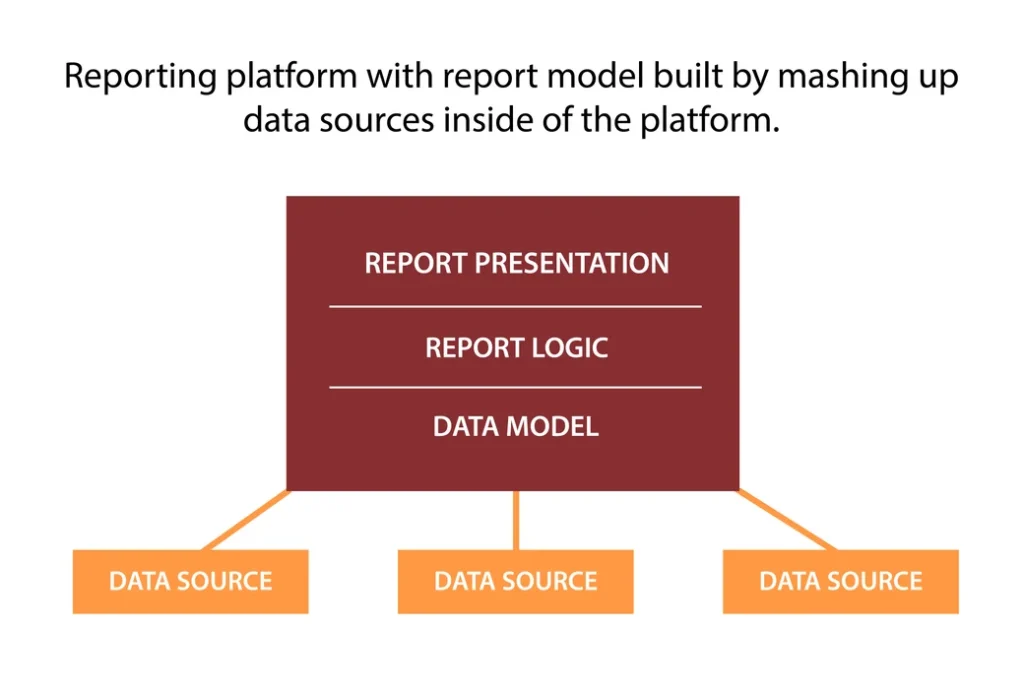
This architecture creates a compounding maintenance problem. If you want to change a field in your CRM or accounting system, your mash-up tool returns a system error. If you want to migrate to a new reporting platform, you have to rebuild your entire data model from scratch. If you want to add a new data source as the business grows, the ETL and data model in your mash-up system become increasingly unstable. Each of these scenarios represents technical debt: the recurring cost that results from choosing the shortcut now.
A data warehouse solves this by separating the layers cleanly. No single tier of the architecture is tightly bound to another.
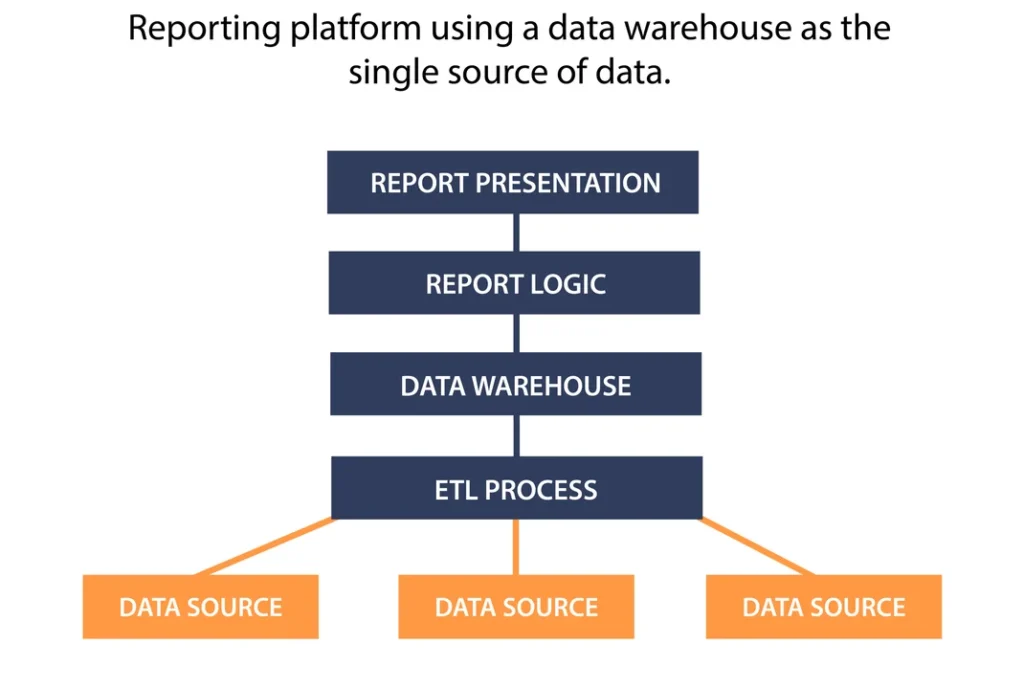
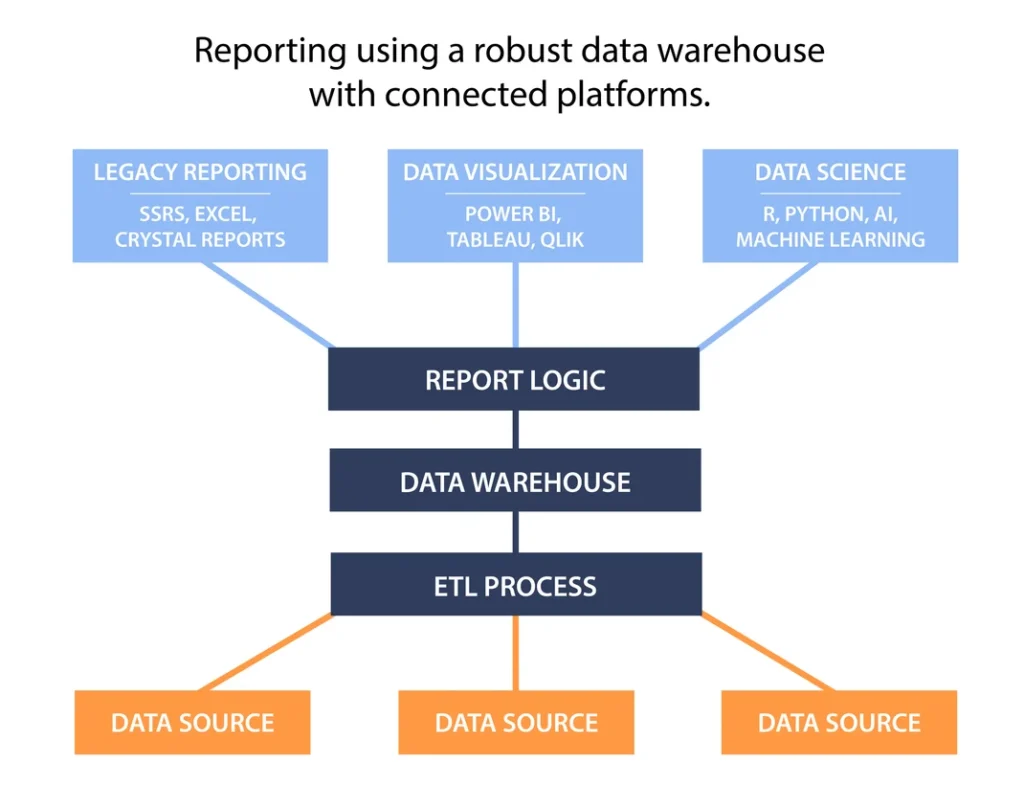
With a data warehouse, you can switch your ETL process, change your underlying business software, or migrate to a new reporting platform without rebuilding everything else. When you add or remove a column in your CRM, your reports continue to function. When you want to connect a second reporting tool, you simply connect it to the warehouse rather than rebuilding the data model inside a new platform.
What a Data Warehouse Delivers
The case for a data warehouse is not just architectural. It delivers practical benefits across security, reliability, compliance, and speed that directly affect how a business operates day to day.
A properly designed data warehouse is the single source of truth. Unlike Excel, there is no risk of working from the wrong version because everyone accesses the same central source. The warehouse is also aware of how current its data is, so users know exactly how up to date the information they are looking at actually is.
On the compliance side, cloud-based BI services have variable compliance profiles, and Excel files on their own are never standards-compliant. A data warehouse enables a single compliance profile for a single master repository, making it straightforward to meet SOX, PCI, HIPAA, or other regulatory requirements depending on your industry. For PE-backed companies managing investor reporting and audit obligations, that governance is not optional.
Security is also meaningfully stronger. A data warehouse lets you control access through user credentials, manage exactly who can see what data, enforce who is allowed to modify versus view data, and audit every aspect of the system. By minimizing direct access to your transactional software, it also protects those source systems from performance impacts or accidental mishandling.
Speed matters more than it might seem. If an employee has to wait sixty seconds for a report to run and does that five times a day over the course of a year, they spend more than twenty hours waiting. For someone earning a professional salary, that is a meaningful cost in wages, and it does not account for the reports they stop running altogether out of frustration. A data warehouse running on cloud infrastructure handles the heavy lifting far more efficiently than a desktop reporting tool ever could.
Data warehouses also maintain historical accuracy in a way that mash-up systems do not. Consider a scenario where two sales teams are reconfigured mid-year. A system without historical context will retroactively show the teams performing evenly in prior periods because it only knows their current configuration. A data warehouse preserves the state of the data at the time each transaction occurred, so historical comparisons remain accurate regardless of how the business has changed since.
Technical Debt Is the Real Cost of Waiting
For many organizations, the decision to defer building a data warehouse feels like a cost-saving move. The reality is the opposite. Every week spent managing data in spreadsheets or mash-up tools accumulates technical debt that becomes more expensive to pay down over time. Switching a cloud service provider for a key application, migrating to a new reporting platform, or scaling up to handle more data sources all require significantly more rework in a mash-up environment than in a well-architected warehouse.
The good news is that building a data warehouse is far more accessible today than it was even five years ago. Blue Margin’s managed data service builds data lakehouses and, where appropriate, traditional warehouses using an agile sprint-based approach that can take a company from raw data to a functioning semantic layer in a matter of weeks, not months. The comparison between data lake, lakehouse, and warehouse architectures covers which approach is right for which situation, but for most PE-backed companies executing a growth plan, the lakehouse is the practical starting point today.
For companies also thinking ahead to AI workloads, the AI-Ready Data Platform work Blue Margin does starts from the same foundation. A well-structured data warehouse is not just for reporting today. It is the infrastructure that makes AI-driven analytics possible tomorrow.
If you are ready to move beyond spreadsheet-based reporting and build the data foundation your business needs, contact our team to get started.