

Data Transformation and Change Management
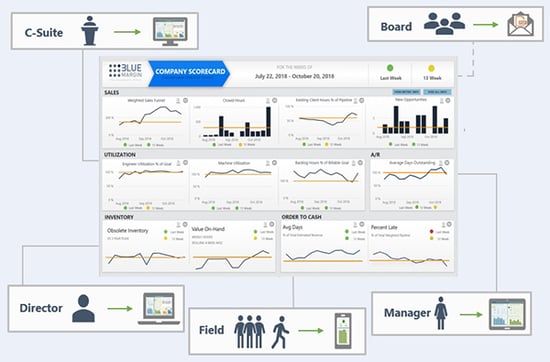
As you consider rolling out new business intelligence technology such as dashboard reporting, it is important to recognize that BI projects are more of a change management initiative than an IT project. Adoption of dashboards depends on widespread behavioral change, and successful transformation depends on an organization’s ability to navigate that change. Research by Forbes and PMI found that 85% of executives surveyed said change management is critical to success in times of disruption. 38% of those same respondents said their employees see change as a threat, so executives should be prepared to thoughtfully lead their organization through disruption.
Change management does not have to be a burdensome or time-consuming effort if leaders focus on three key components of successful change: understanding the change process, applying change management best practices, and developing a healthy culture that expects and embraces change.
Learn and Champion the Change Process
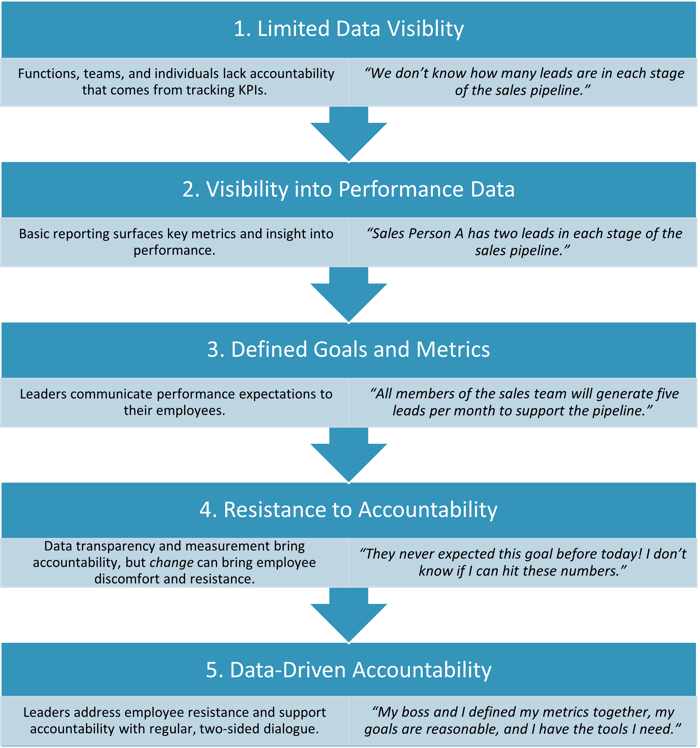
For best outcomes, change management depends on effective communication during the introduction of new expectations, the implementation of new processes, and the reinforcement of new behaviors. To better understand the progression of employee attitudes and behaviors during a change initiative and the benefit of data-driven accountability, the scenario below walks through a sales director implementing BI dashboards and KPIs to monitor sales team performance.
Three Change Management Best Practices
Understanding the change management process and preparing for potential employee responses makes it easier for leaders to get started. There are three key considerations to successfully implement BI and navigate resistant employees: appoint a change sponsor, follow the change process, and involve employees throughout.
Appoint a Change Sponsor
A change sponsor oversees and takes responsibility for the success of the project. Chief Technology Officer Andy Scott says, “The value isn’t created by the data, it’s created by the change that a project delivers.” A change sponsor’s responsibilities include securing executive buy-in, removing organizational obstacles, championing the initiative publicly, and holding the team accountable to milestones throughout the rollout.
Follow the Change Process
There are many valid change models, but all involve the process of ceasing old behaviors, enabling new ones, and sustaining change. The business world widely recognizes John Kotter’s eight-step model for leading change.
Involve Employees
Inviting a two-way dialogue with employees around KPIs and data visibility will help the changes take hold, and research shows that participative leadership supplies better results. Co-founder Jon Thompson says this about the process of developing goals with employees:
If you work with end-users to understand their natural process of awareness, analysis, and action to get their job done, then design a dashboard that supports that process, you will win them over. Dashboards move employees out of the fog of war, micro-management, the vague and constant pressure to “do better,” never knowing with certainty if they are succeeding in their work. Dashboards give employees agency, ownership, firm footing, and yes, accountability. Those who want to make an impact and be part of a team will thrive in that environment.
Jon Thompson, Co-Founder, Blue Margin
Develop a Healthy Organizational Culture
A final priority when building a company that embraces change as a pillar of its success is to focus on culture. Leaders should nurture a culture celebrating innovation, faster response times, and continuous improvement. The rapid evolution of disruptive technologies makes a change-oriented culture more of a necessity than ever. Leaders can support this by sharing stories that honor innovation, recognizing accomplishments, and encouraging employees to think like entrepreneurs.
To be successful with BI projects, leaders should approach them through the lens of change management. Leaders that understand and employ change management best practices and establish a company culture that embraces change will be well positioned to navigate digital transformation and outpace their competition. A managed data partner can reduce the technical overhead so your leadership can focus on the change management work that actually determines adoption. Talk to Blue Margin about how we approach BI rollouts as change initiatives.