
Understanding PE Buy-and-Build Success Factors
Reliable buy-and-build strategies that compete in the crowded private equity space require focused, intentional plans that involve multiple acquisitions of smaller—often underperforming—companies.
While many factors determine success over the course of the buy-and-build cycle, the potential to realize multiple arbitrage begins with the underlying strength of the platform company—and the leverage this gives general partners when pursuing lower-multiple deals. If the platform company has systems that support efficient integration, GPs can more confidently acquire underperforming targets at reduced multiples, securing a key component of the arbitrage strategy.
With efficient integration, the performance of acquired bolt-ons can rise more quickly to the level of the platform company. Conversely, inefficient integration not only prolongs underperformance and suppresses bolt-on valuations, but can also drag down the performance and value of the platform company itself.
Companies that choose not to use data to create value risk hastening their own obsolescence or, at the very least, losing competitive advantage.
Boston Consulting Group
The Value and Role of Data in Private Equity
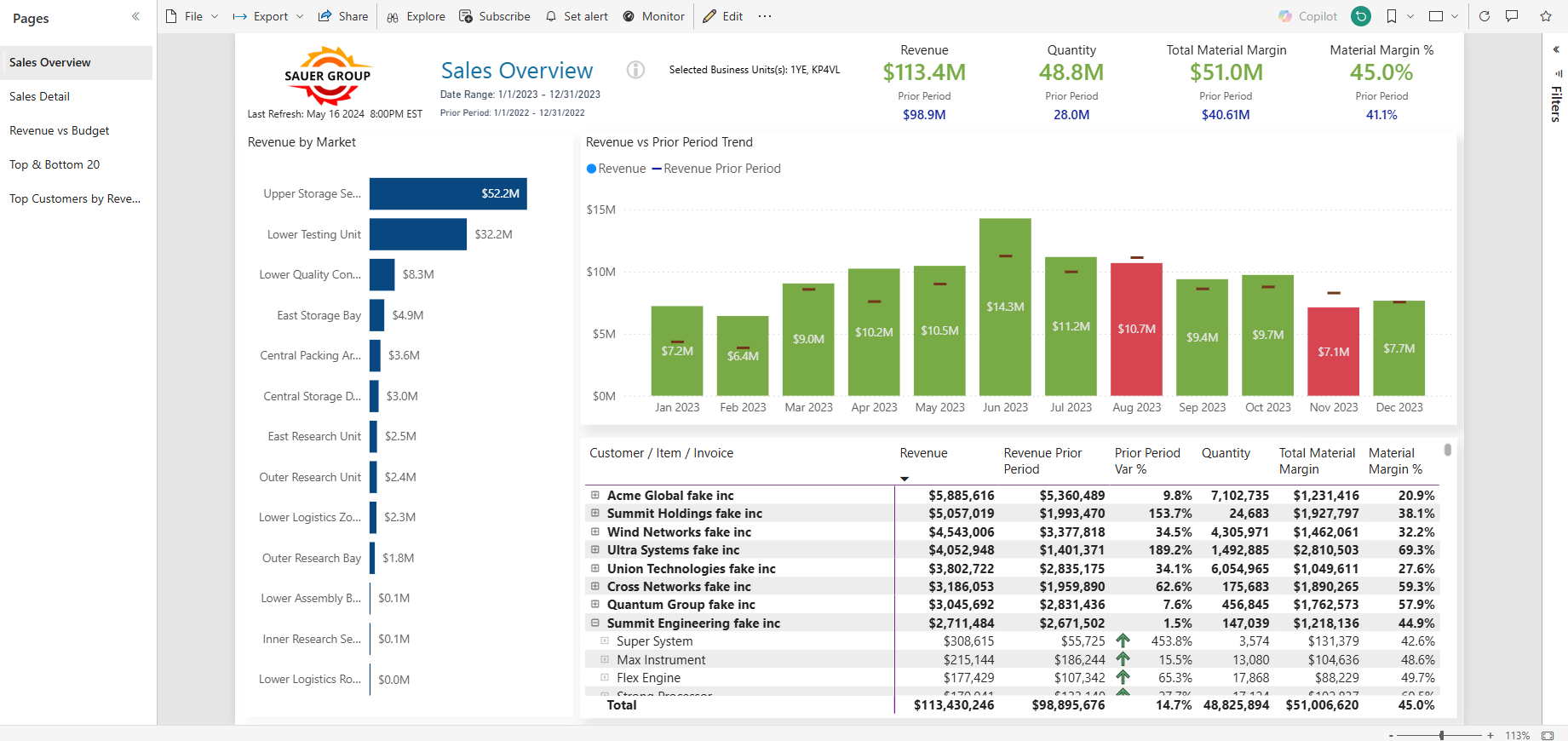
One of the most critical—and perennially frustrating—elements of integration is data, specifically the ability to clearly assess performance in aggregate and in comparison across business units. Cobbling together reports from disparate systems, or waiting for full software integrations, increases risk when acquiring underperforming assets.
Flying blind often leads to reactive decisions, unintended consequences, and management turnover. In contrast, strong private equity data intelligence allows bolt-ons to operate effectively from day one, without disruption.
Reinforcing this point, Boston Consulting Group warns in its article Creating Value in Private Equity with Advanced Data and Analytics that “companies that choose not to use data to create value risk hastening their own obsolescence or, at the very least, losing competitive advantage.”
Integrating data from acquisitions may feel overwhelming, but it doesn’t have to be. As outlined in prior private equity data intelligence insights, investors need near real-time access to portfolio-wide performance data to identify and overcome barriers to growth.
The Modern Data Platform
Enter Microsoft Fabric*. Fabric brings together familiar tools—such as lakehouses , data lakes, and Power BI—to store, model, and report on data from a single platform.
This approach supports efficient bolt-on integration by providing private equity firms with:
- Data sources that can be incorporated quickly with minimal disruption to existing processes ( learn more about fast integration with data lakes )
- A flexible data platform that adapts as reporting requirements evolve
- Near-term ROI through agile implementation that delivers actionable insights early and often
- A strong foundation for generative AI and natural language querying
PE Buy-and-Build Success Factors: Takeaway
A modern data platform gives general partners a meaningful advantage in competitive markets. By enabling strong platform companies to efficiently integrate underperforming bolt-ons, firms can pursue lower-multiple acquisitions and lay the groundwork for successful arbitrage.
*While Microsoft Fabric is still in preview, your data can be prepared for the transition today. We can handle the heavy lifting of consolidating your data into a centralized data lake—or partner with you as your fractional data team to turn that data into value-driving insights. Contact us to get started.